

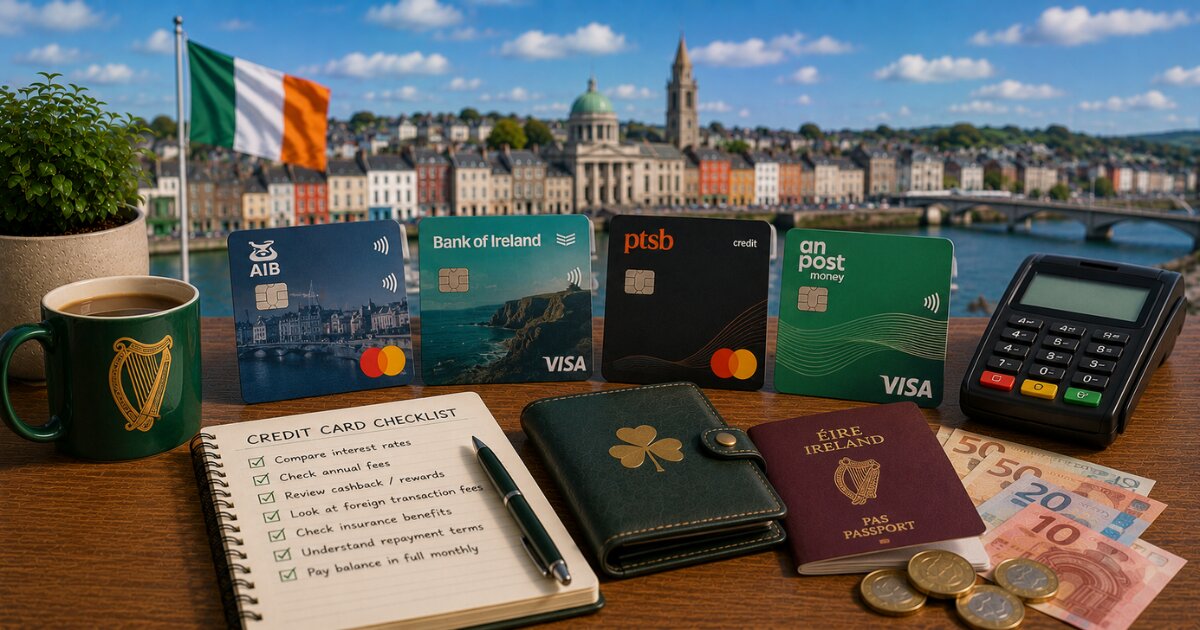
The Irish credit card market is smaller than the UK or US markets but still offers Irish consumers meaningful choices. From low APR cards for those who occasionally carry a balance to cashback and rewards cards for those who clear their balance monthly, understanding your options helps you choose a card that genuinely adds value.
Credit Card Interest Rates in Ireland
Credit card interest rates in Ireland are generally higher than equivalent rates in the UK. Standard purchase APRs typically range from 18 to 23 percent. This makes carrying a balance on an Irish credit card particularly expensive, reinforcing why paying in full each month should be the default approach.
Ireland’s Central Bank regulates credit card lending and requires full disclosure of all fees and charges before you sign a credit agreement.
Best Credit Cards in Ireland
AIB Platinum Visa
AIB’s Platinum Visa is aimed at higher-spending Irish consumers and offers cashback on purchases, complimentary travel insurance and no foreign transaction fee surcharges for euro-zone spending. AIB is one of Ireland’s most established financial institutions, giving Irish consumers confidence in the card’s stability.
Bank of Ireland Explore Credit Card
Bank of Ireland’s Explore card offers rewards that can be redeemed for travel, vouchers and merchandise. As one of Ireland’s pillar banks, Bank of Ireland offers robust customer support and integration with its existing banking app for cardholders.
Permanent TSB Mastercard
ptsb’s credit card is available to existing ptsb current account customers and offers competitive rates alongside the bank’s wider digital banking platform. The card has straightforward fee structures and is a practical everyday card for ptsb customers.
An Post Money Credit Card
An Post Money, the financial services arm of Ireland’s national postal service, offers a credit card with a competitive ongoing interest rate. For Irish consumers who want a straightforward, lower-rate card from a trusted Irish institution, the An Post Money card is worth considering.
N26 and Revolut as Alternatives
While not traditional credit cards, both N26 and Revolut offer Irish consumers debit products with cashback, no foreign transaction fees and excellent app-based money management features. For spending abroad, Revolut’s free tier card offers interbank exchange rates with no hidden fees, which is a significant advantage for Irish travellers.
Credit Card Fees in Ireland
Annual fees on Irish credit cards are generally modest compared to premium cards in larger markets. Many standard Irish credit cards have no annual fee or a low fee of EUR 30 to EUR 60.
Stamp duty of EUR 30 per year applies to all active Irish credit card accounts, charged by Revenue. This applies regardless of which card you use and is automatic.
Foreign transaction fees of 1.5 to 3 percent apply on most Irish credit cards for purchases made in non-euro currencies. This is a meaningful cost for Irish consumers who travel outside the eurozone or shop online in USD or GBP.
Section 5 Consumer Protection on Irish Credit Cards
Irish credit card purchases over EUR 100 may be covered under the Consumer Credit Act, providing you with some protection if goods or services are not delivered or a company goes into administration. Check the specific terms of your card and issuer, as protections may vary.
Using Credit Cards Abroad as an Irish Consumer
For purchases outside the eurozone, the foreign transaction fee significantly affects the true cost. Revolut’s free tier offers near-interbank rates up to certain monthly limits, making it a practical travel companion alongside your regular credit card.
Within the eurozone, Irish credit cards generally work without foreign transaction fees, as euro transactions across EU countries do not typically attract currency conversion charges.
Frequently Asked Questions
What is the best credit card for Irish consumers?
The best card depends on your usage. For no foreign transaction fees, An Post Money or AIB Platinum are strong options. For flexibility and everyday rewards, Bank of Ireland’s Explore card is worth considering.
How do I apply for a credit card in Ireland?
You can apply online through most Irish banks’ websites. You will need proof of identity, proof of address, proof of income and details of existing financial commitments.
Do Irish credit cards charge foreign transaction fees?
Most do, typically 1.5 to 3 percent on non-euro purchases. Cards marketed as travel-friendly typically waive these fees or offer competitive rates.
What is the stamp duty on Irish credit cards?
Revenue charges EUR 30 per year per active credit card account in Ireland. This is automatically deducted and applies to all cards.
Can I get a credit card in Ireland with bad credit?
Options are limited for those with a poor credit history in Ireland. Building your credit score through responsible use of a current account, meeting all existing financial commitments and reducing any outstanding debt improves your eligibility over time.
This article is for educational purposes only and does not constitute financial advice.